Golden Ratio in Motion Design

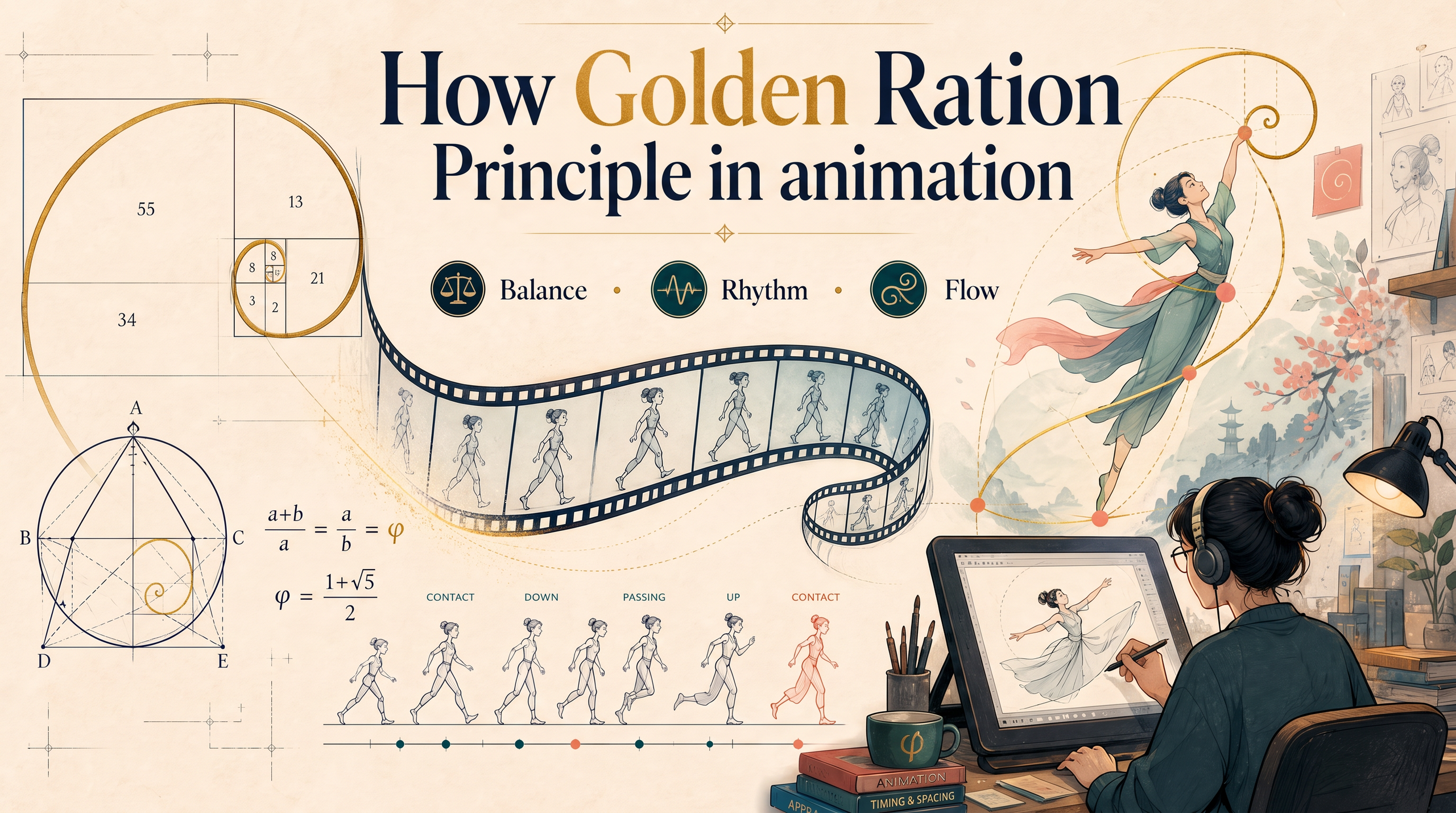
Ever wondered why some designs and motion graphics just feel right, even before you understand the context?
The Golden Ratio might be part of the reason.
We usually associate the Golden Ratio with mathematics, architecture, art and photography. But it can also be a useful way of thinking about motion design.
So, how can it influence the way a viewer experiences a scene?
Here are 5 areas where I find it useful:
1. Composition → Where does the eye land?
Using proportional relationships to decide where the hero element sits, what becomes secondary, and where the viewer’s attention should go first.
2. Scale → What gets importance?
Creating visual hierarchy between the main element and supporting elements through proportion.
3. Spacing → How does the frame breathe?
Using proportional relationships between elements to create balance rather than placing everything at arbitrary distances.
4. Timing → How does movement feel?
Golden Ratio ≠ animation timing formula.
But proportional timing between movements can create rhythm and hierarchy—allowing one movement to lead while others support it.
5. Camera Movement → Where should the eye travel?
Instead of moving the camera randomly, proportional composition can help define a more intentional visual path from one focal point to another.
The interesting part?
The Golden Ratio isn’t a formula for making great animation.
For me, it’s more of a design intuition—a way of thinking about relationships, proportion and hierarchy that designers often use without consciously calculating 1.618 every time.
Because ultimately, motion design isn’t just about making things move.
It’s about deciding what the viewer should notice, when they should notice it, and where their eye should go next.
Got an idea that’s tricky to explain? Let’s talk and turn it into something people actually get.